About
Just a brewer using AI, what could go wrong :) ...
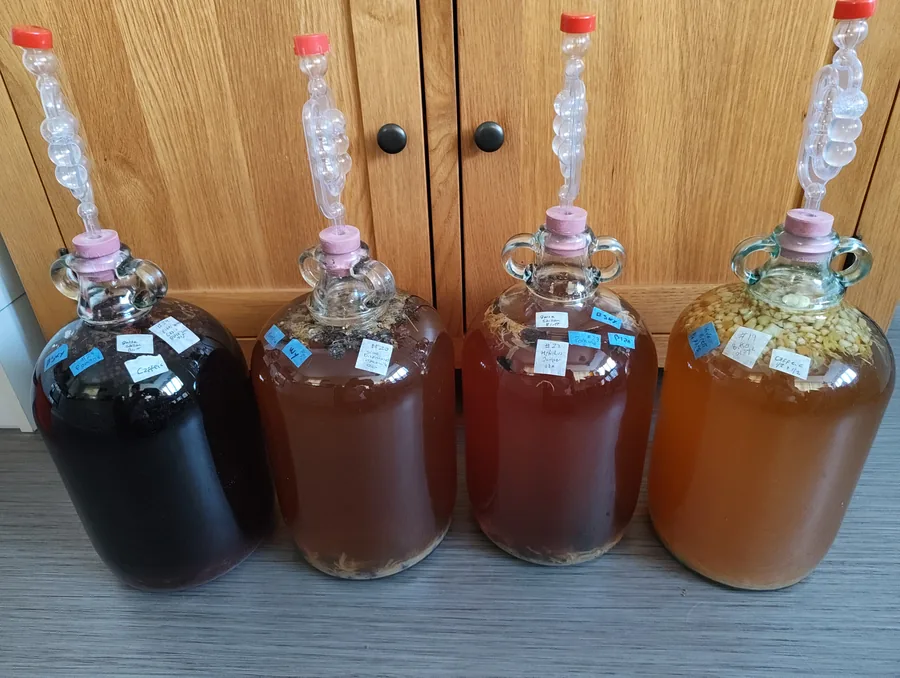 The many, many adjustments, additions and blends. A label goes on after each one · and there are sooo may
I have been brewing since around 2017. The first sour beers turned up in 2018-19 and were interesting enough that I kept going. Not long after I bought a microscope, and things got slightly out of hand.
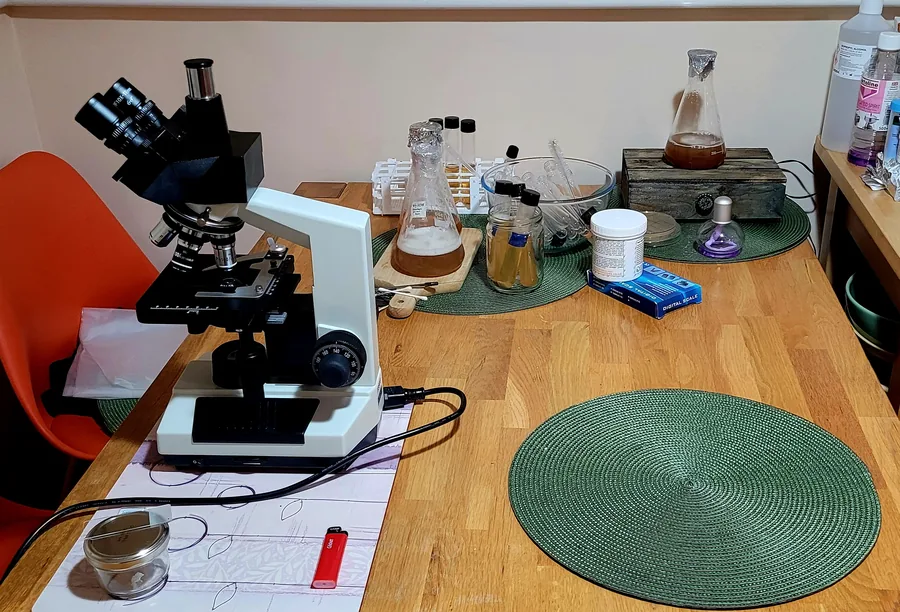 Home lab, pushing the boundaries on what the wife tolerates
What started as wondering what was in a bottle is now a bank of isolates, a shelf of stock solutions and rather more glassware than one kitchen should hold. None of this is a laboratory. It is a dining table, a pressure cooker and a very patient household.
I do not work on it alone. I consult my son when I want a second opinion on whether a morphology matches something we have seen before, or when an otherwise clean Brettanomyces or Saccharomyces slide needs hunting over for bacteria that should not be there.
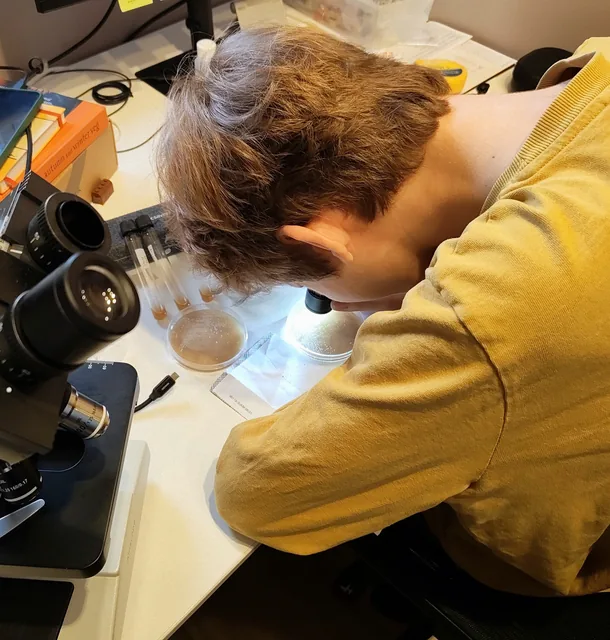 Hunting for shiny goat and dull goat colonies
This is most of what the microscope is for: telling one thing from another, and checking that nothing has arrived uninvited.
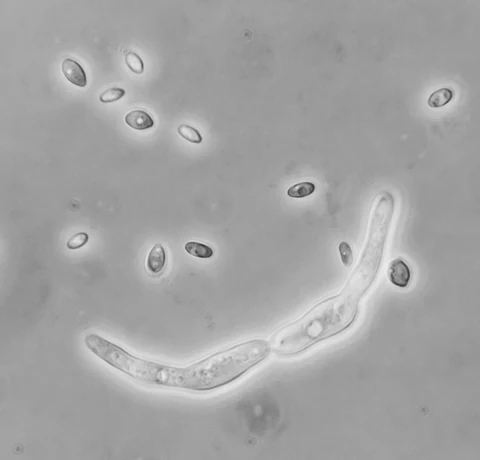 Bretts of a different kind, or bretts of the same type, who knows · 1000x phase contrast
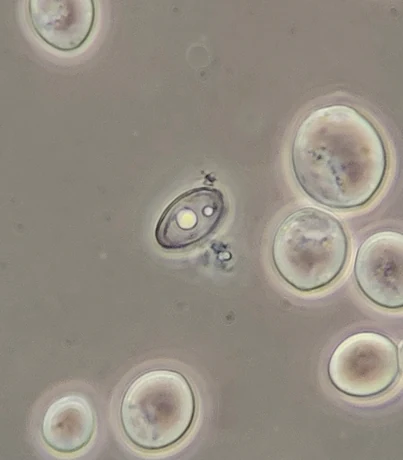 A Brett cell among Saccharomyces beasts. That is what I usually aim to isolate · 1000x phase contrast
How this wiki works
This is the notebook. Every culture gets a journey page, every preparation gets an ID, every number carries a confidence tag, and anything I have not actually done is marked as such.
That is not rigour for its own sake. Lambic punishes vagueness on a two-year delay, and by the time the beer tells you that you got it wrong, all you can do is blend around it. The reasoning behind all of it is in Lambic Fundamentals, and I would rather not repeat it here.
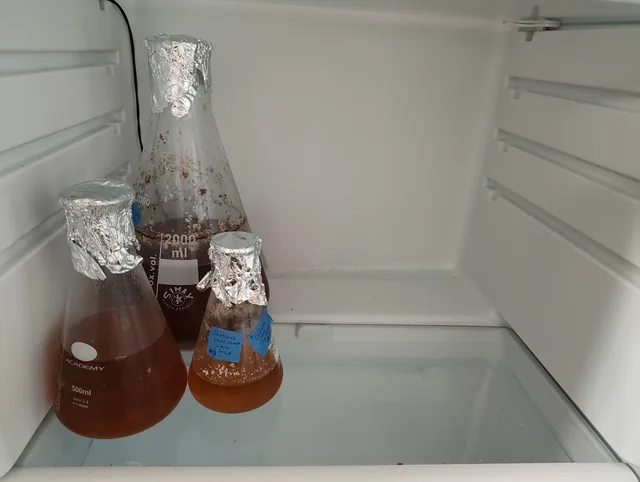 A more typical yeast prep for bulk fermentation, no split: a big Saccharomyces pitch, a main
Brett and two or three complementary Bretts, all pitched at once
A more typical yeast prep for bulk fermentation, no split: a big Saccharomyces pitch, a main
Brett and two or three complementary Bretts, all pitched at once
Everything here is home practice, at homebrew scale, with kitchen-grade measurement. Everything here is AI generated, I may be CLI-ing madly, but I have not written any of this directly. Read the disclaimer first. For all we know, not a single word here stands true.
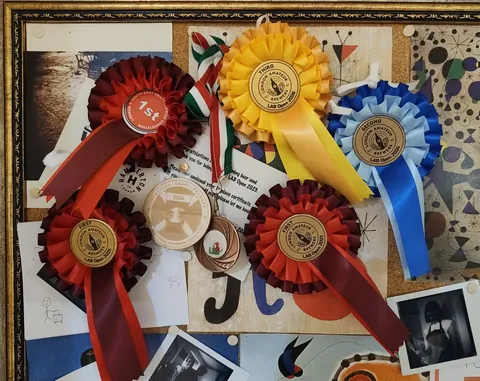
Medals
My very modest, but very treasured medals collection
(let's hope it grows, and if it doesn't, I can just generate some more)
See the disclaimer.
Contact
Naaa, I'd just make things cloudier (see what I did there?).